
Master Park is one of the most skilled practitioners and instructors of the art alive today.
He studied the art of Ba Gua Zhang for 17 years under his teacher Lu Shui-Tian. Park started training with Lu in 1960, when he was 18 years old. From 1960 to 1978, the only thing that Park did was study and practice Ba Gua. He excelled under the rigorous training regimen imposed by his teacher, and was ultimately chosen by Lu Shui-Tian to be his successor.
Finding a teacher
Park studied Western boxing in junior high school and switched to Tang Soo Do, a Korean martial art, in high school, earning a black belt after four years. When he graduated, his father, who had been a professional soccer player and knew the value of physical training, gave him a choice: become serious about martial arts and find a good teacher, or forget about them and concentrate on his school work. Park chose martial arts.
His father felt that to excel he needed a Chinese teacher. Park’s aunt lived in Inchon’s Chinatown, a few doors from a teacher famous among the Chinese there, and she asked if he would consider teaching her nephew. That teacher was Lu Shui-Tian.
When Park knocked and asked Lu to teach him, Lu looked at him and closed the door. Park came back every day for four weeks and got the same answer. Just as he was about to give up, he was invited in, told to sit and watch the students practice, and asked to sweep the yard when they finished. This went on for days. Once, when rain threatened, Lu made him sit until it was pouring and only then told him to go and rake the yard. Weeks later it rained again and Park went out with his rake, and Lu told him to wait until the rain stopped. He had passed the test. Soon after, he was allowed to join the class.
Training under Lu Shui-Tian
For the first three years Park was taught only basic, repetitive drills. Each exercise was demonstrated once, without explanation, and Lu simply said, “Go practice.” If an exercise was not to his teacher’s liking he received no correction and nothing new until he had worked it out for himself. After five years of daily training Lu patted him on the shoulder one morning and said, “I trust you.” That was the whole lesson for the day. When Park came back the next day the teaching began to move faster, and Lu started to explain why he had practiced all of those drills.
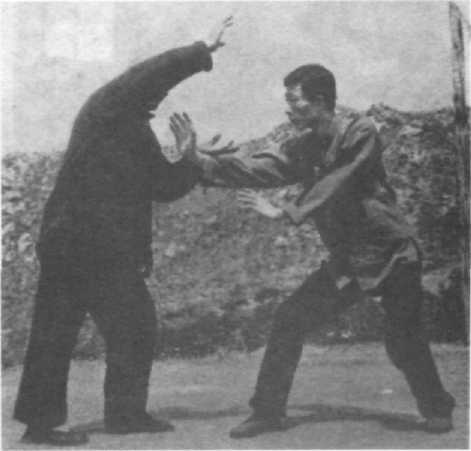
Lu then taught him the philosophy and theory on which the art is based, and how the Ba Gua, the I Ching, the Five Phases, and Yin and Yang apply directly to footwork, body movement, kicks and strikes. Only then did he begin the 64 palm combat form, one section at a time. For each section Park had to research on his own how every move could be used, in more than one way, and show his teacher the result. Lu’s usual response was “That is not right” or “You missed something.” Each section took four to six months, and the eight sections took three years of daily practice. Lu also set him tactical puzzles, some of which took more than two years to solve. Master Park says that because he discovered these things through his own research, he has never forgotten them.
Lu also took him to visit other Chinese martial arts schools in Korea. After talking with his friends for a while Lu would stand up and ask who would like to spar with his student, so that Park could experience other fighting styles and research how best to handle each one.
Chosen as successor
After Park had been studying for 11 years, Lu chose him as his successor and the lessons began to come fast and furious. When Lu felt that Park needed time to absorb it all, he wrote out a one year training program and sent him to live in a Buddhist monastery in the mountains of Korea, where he practiced almost every waking hour. When he returned, Lu, who never once told him he had done something well, asked if he had spent the year taking naps. Park asked for another one year program and went back to the mountains. When he returned the second time, Lu was happy with his progress.
Teaching in Korea
Park began teaching Ba Gua in Korea in 1971, though he had not intended to open a school. Lu’s son, Lu Shu-De, opened one and asked for his help, then handed him the first month’s tuition and told him it was his school now. Lu Shui-Tian came every day to teach him how to teach, insisting that each student is different and needs a training program of his or her own. Through his experiences as a student and as a teacher under Lu’s watchful eye, Park developed a very sound and thorough Ba Gua Zhang training program.
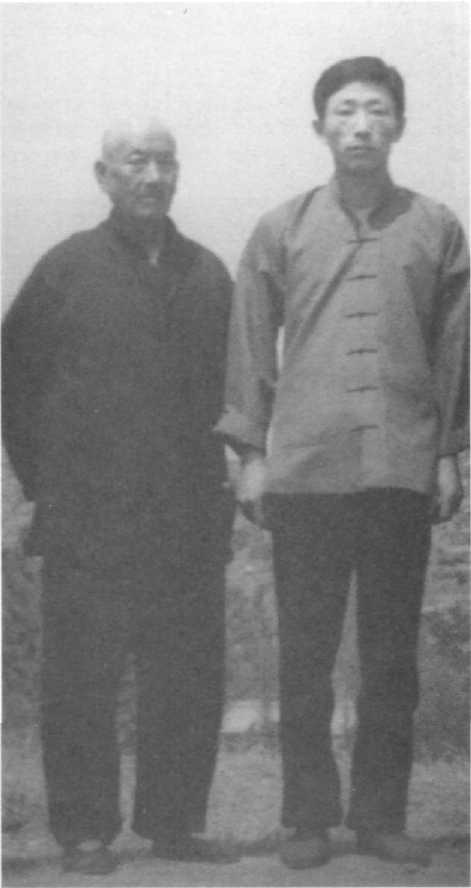
His school became so well respected that anyone who wanted to open a martial arts school in Inchon would first ask his permission. In 1978 Lu Shu-De turned over the Ba Gua Zhang research association he had formed in Korea, and Park opened its membership to anyone with an interest in the art’s future. From 1979 to 1986, Park took many students to fighting tournaments in Hong Kong and Taiwan. His teams always performed very well in these full contact events, and became known for their Ba Gua Zhang fighting skill in both places.
Coming to the United States
In 1987 Park was invited to perform in a Chinese Martial Arts Masters Demonstration in Los Angeles. One of his American students, a soldier who had begun training with him on an Army base in Korea, brought him to Virginia and convinced him to stay. With senior students able to take over his school in Korea, Park opened a school in Richmond, Virginia, where he established his headquarters. He went on to found the Qiang Shan Ba Gua Zhang Association to carry on the art as taught by Lu Shui-Tian.
The stele
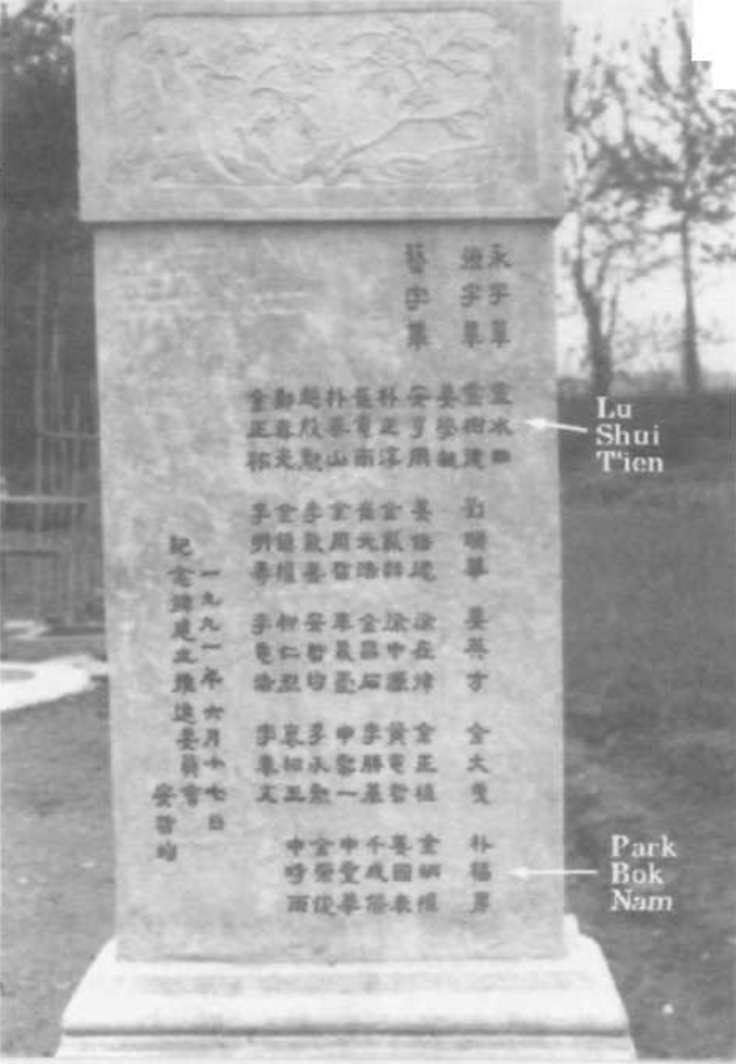
As a testament to his authenticity, Park Bok-Nam’s name appears on a stele that was erected at the burial site of Dong Hai-Chuan in China, formally documenting him as a true sixth generation lineage disciple. The stele was sponsored by the Korean Kung Fu Association in 1991 to officially record the lineage history of Pa Kua Chang in Korea.
Dong Hai-Chuan’s tomb has a colorful history. His students placed a stone at the burial site in 1883, and over the years other practitioners added markers of their own to show their respect. The original tomb was destroyed during the Cultural Revolution and the stones were buried, until the monuments and Dong’s body were unearthed and moved to a new location in 1980 and 1981. Practitioners from around the world donated to restore it.
The stele added in June of 1991 records that Ba Gua Zhang was brought to Korea by Lu Shui-Tian. Three generations are carved into the stone: Lu alone, then six of his students, including his son Lu Shu-De and his number one student, Park Bok-Nam, and then the students who followed them.
Keep reading
Lu Shui-Tian
Brought Ba Gua Zhang from China to Korea, where he taught in Inchon.
The Association
Founded by Master Park to carry on the art as taught by Lu Shui-Tian.